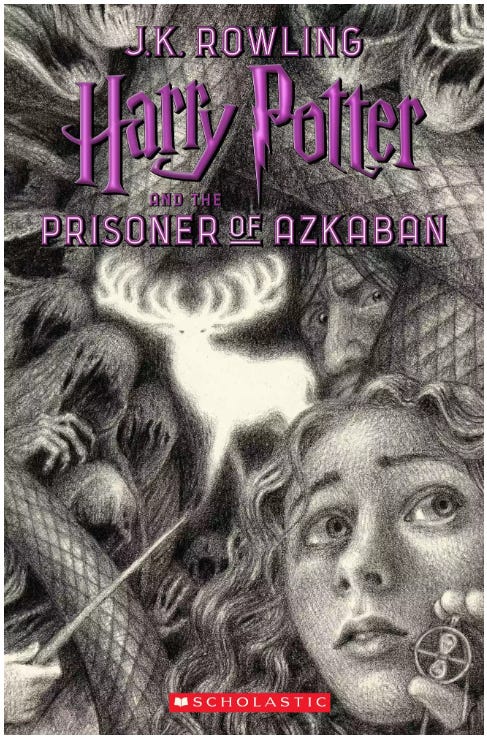
I had watched the entire Harry Potter series several times over before I ever cracked open the first book. Well, this year, I finally made it my business to read all seven books. Immediately after finishing each book — six to twenty-four hours later — I went over to the Blu-Ray shelf, pulled out my trusty ol’ eight-film boxset, and I rewatched the movie that I had just finished reading the source material for.
Below, I have ranked the movies with eyes that have finally consumed the contents of J.K. Rowling’s novels. This would not have been how I would’ve ranked the films before reading the books. In fact, a few movies made significant moves upward or downward since.
Along with the rankings, you will find my instant reactions to watching these films I thought I knew so well, after reading each novel they were adapted from. Some of these instant reactions were positive ones (Order of the Phoenix, Deathly Hallows: Part 1), and some were negative (Half-Blood Prince, Deathly Hallows: Part 2).
All in all, I’m glad to have finally gone through these books. It’s very safe to say that I’ll never watch these movies the same again — for better or worse.
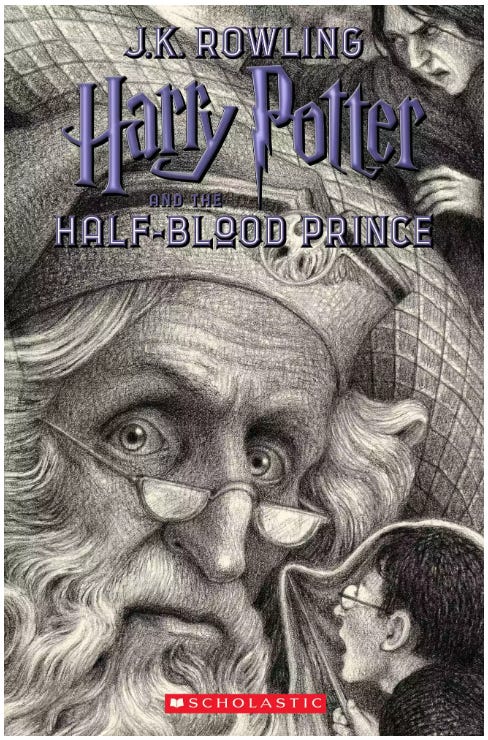
8) HARRY POTTER AND THE HALF-BLOOD PRINCE
I am currently in a state that can only be described as a cocktail of perplexed and disappointment.
First of all, the film spends so little time on the Potions textbook that they may as well have renamed the movie. Because as it stands, Half-Blood Prince just seems like a silly title for this film. The book spends a lot of time on the textbook, and therefore, on the Half-Blood Prince.
It also spends a lot of time with Dumbledore — specifically, Harry does. They share a large portion of this book together, visiting memories of Tom Riddle and discussing them afterward. In the film, they only visit two of Tom’s memories. TWO. We don’t spend nearly enough time with Dumbledore in this adaptation, especially considering how it ends.
You know what the movie spends a lot of its time on, instead of the Half-Blood Prince and Dumbledore? The teenage romances. GOOD LORD. We spend so much time on this that one would think 80% of the novel is focused on teenage romances. It’s hard to say off the top of my head, but I’d venture to guess 70% of this film is either vaguely or explicitly exploring the romances (at least, that’s how it felt), while no more than 25% of the book is spent exploring that topic. It’s mind-boggling to think that this was the aspect of the book that they felt required the most screen-time for the sixth of an eight film series.
Since we’re on the subject of the romances, I might as well mention that they are EX-CRU-CIATING in this movie. While the connection between Ginny and Harry is sweet in the book, it is absolutely nothing if not cringe-inducing in the film. There isn’t a shred of believable romance to be found, and their attempts to manufacture it made me want to look away from the screen. Actual relationship building was replaced by moments where Ginny is feeding Harry cookies, or bending over to tie his shoe.
Speaking of Ginny: What in the name of God have they done to my precious Ginny? By this point in the books, she has grown to become a beautiful strong character who is sought after by many, can hold her own in any situation, and isn’t afraid to mouth off at anyone. The movie version of Ginny is unrecognizable. She’s almost the same little girl that couldn’t even utter a word around Harry — except now she can, even though she has nothing to say.
Having seen the films multiple times each throughout my life, I have always said that I wished they were darker than they were. I always saw the potential for it, and never felt fully satisfied by the way they turned out. This movie cements that feeling. Because now that I’ve finally read the first six books, I’ve learned that the story of Harry Potter does indeed descend into the darkness — I’ve just never experienced it until now. Half-Blood Prince, the novel, dives into the darkness in a way none of the other books had up to this point. From beginning to end, you feel the weight of everything in a way that brilliantly builds to the finale, leaving you emotionally wrought, with a sense of true loss.
The reason I had never experienced this depth of darkness before is because the film adaptation for Half-Blood Prince is basically a romantic comedy. This may sound like hyperbole, but it honestly, genuinely, is not. This movie goes miles out of its way to try and be funny. They turned the darkest book in the series into a poorly-executed comedy.
The film kicks off on the correct tone, as we watch the Death Eaters terrorize both the Muggle world and the Wizarding world. I really appreciated the way Draco’s inner turmoil was portrayed throughout. And I must say, Katie Bell’s episode with the cursed necklace was exquisitely done — it was properly horrific to watch. That should have been the tone throughout. We’re approaching the series’ climax. This was not the time to experiment with comedic elements. No, it was not a good idea to have Ron joke about the female race being the death of him immediately after he LITERALLY almost died by poisoning.
My mind is a bit cloudy from being completely blown by this viewing, but I think I’m willing to say that while Harry Potter and the Half-Blood Prince might be my favorite book of the series, Harry Potter and the Half-Blood Prince is probably my least favorite movie.
7) HARRY POTTER AND THE CHAMBER OF SECRETS
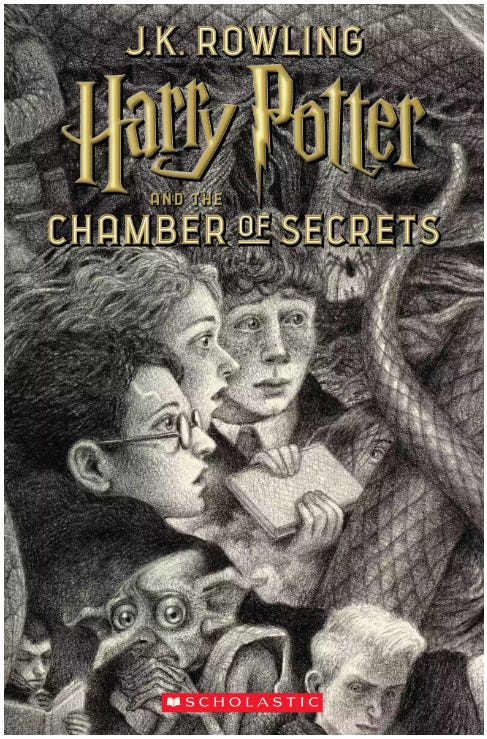
Book and movie, this is just one of the weakest stories of the bunch, I think. From the annoying Gilderoy Lockhart, down to that climax absolutely riddled with plot conveniences. Oh, and also, Lucius Malfoy was in broad daylight at the end of the film, just outside of Dumbledore’s office, about to literally murder Harry with an Avada Kedavra — Jesus Christ.
I do really like the mystery surrounding the Petrified victims. I liked the part that Ginny played in this story, although I wish she was shown at least one or two more times throughout the movie. Finally, I really appreciate that this story dipped its toe into far darker tones than Sorcerer’s Stone did.
6) HARRY POTTER AND THE DEATHLY HALLOWS: PART 1
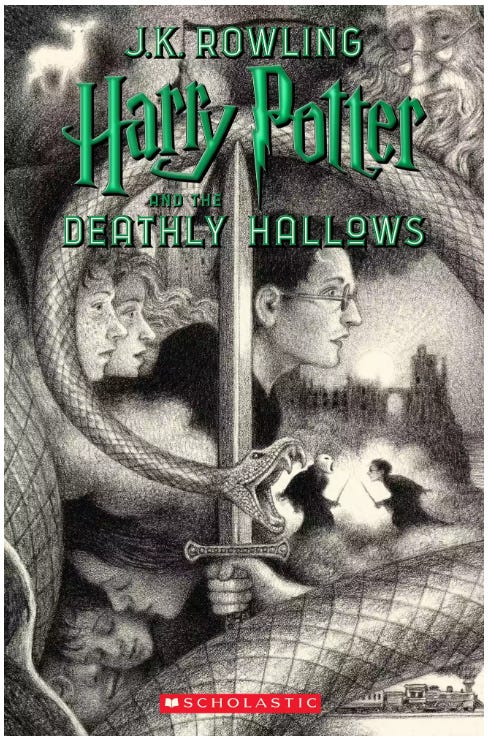
Having finally read the novel, I think that I actually kind of like this movie now. Its loyalty to the source material made this viewing much more enjoyable than all the ones that preceded it. As an adaptation of the first half (or so) of the final Harry Potter book, it’s pretty solid — but as a film that had its own release date a year before the finale, and clocks in at almost two hours and twenty minutes, it really does feel like we only got half of a story.
There’s sort of a reason why Harry Potter and the Deathly Hallows was a single 759 page novel and not two far shorter ones. It’s telling a single story: Beginning, middle, and end. For context, this movie ends at around page 481 of the book. It was only the beginning and part of the middle. There’s simply no way you can be totally faithful to the source material AND make this as satisfying a standalone film as it needs to be to justify splitting the novel in half. Those two things are, unfortunately, mutually exclusive.
5) HARRY POTTER AND THE GOBLET OF FIRE
This is the first Harry Potter movie that had to make significant cuts to its source material. Changes also needed to be made to save time — and for the most part, I think those changes were deftly handled. It is unfortunate, however, that we’re forced to lose a few characters, either by completely removing them from the film, or by scraping out almost all of their essence, leaving only a shell.
The passage of time plays a fairly large part in this book: How Harry uses the time to prepare for the tournament tasks, or how he uses the time to make excuses to push his preparation off. But what’s missed most of all in the movie is the time that Harry spends drowning in his anxieties over everything — the ball, the tasks, the ever-looming presence of Voldemort, etc. For that reason, in addition to the fact that Harry was instantly up and at ’em after the climax, the stakes often fall flat in this adaptation.
4) HARRY POTTER AND THE DEATHLY HALLOWS: PART 2
While Part 1 was remarkably loyal to the source material, Part 2 was not so much. Some of the changes are real head-scratchers, but a lot of them seemed to have been done to make a scene or sequence more capital-e Epic (see: when Snape was ousted from Hogwarts, and the final showdown against Voldemort). While I wasn’t offended by these changes, they certainly didn’t strike me as improvements to the decisions made for the novel. The climax, specifically, was obviously changed to look better in trailers — and of course, eventually, the big screen. Harry’s face-to-face with Voldemort at the end of the book was far from cinematic.
The biggest change this movie made was arguably the most welcome one: Since we were allowed to stray from Harry’s point of view for the film, we got to see what all of the supporting characters that we’ve learned to love are doing during the Battle of Hogwarts. That being said, it’s bewildering to me that not only would they avoid showing us Lupin and Tonks’ deaths, but they would also, inexplicably, kill Fred off-screen. What’s the point of breaking POV to show us Neville taunting a horde, and McGonagall casting spells, and the Malfoys running away, and Ron speaking parseltongue he learned from Harry’s sleep-talking if we weren’t also going to watch more of our favorite characters meet their ends? And why see all of that but not see Fred’s death — which on a handwritten list of expendable details from the book would not have even been on the piece of paper?
Deathly Hallows: Part 2 is a satisfying close to an eight-film franchise. Its biggest downfall is that it has to compete with Harry Potter and the Deathly Hallows, the novel. At the end of the day, believe it or not, we’re allowed to have both. We’re allowed to like both, and treat them as the separate entities that they are.
Oh, and Albus Rubeus Potter > Albus Severus Potter.
3) HARRY POTTER AND THE SORCERER’S STONE
The main thing that stood out to me after reading this book for the first time was how quickly the film moved the story forward, as opposed to the novel. Everything felt like it was moving in fast forward — story beats were flying by, one after another, given little (if any) room to breathe. It dashed on with remarkable efficiency, all the way through its tight two and a half hour runtime.
2) HARRY POTTER AND THE ORDER OF THE PHOENIX
This movie takes the gargantuan, bulky book, chops out a lot of the fat, and explores the characters in a way that the other films don’t. For the first time, we’re seeing all of the traumatic events of the previous four years catch up to Harry and finally really affect him. While I think the book does a better job exploring that (I LOVE CAPS-LOCK HARRY), this movie uses its medium to add to it, or to take a second, fresh swing at the material.
For example, they use cinematic ways of showing how Voldemort has crept into Harry’s mind, like the moment on Platform 9 & 3/4, and when Voldemort was trying to convince Harry to kill Bellatrix, and most effectively after the duel with Dumbledore: “You’ll never know love, or friendship. And I feel sorry for you.” 🥺
Helena Bonham Carter as Bellatrix Lestrange is on the all-time list of casting decisions in film history. She really breathes new life into the character that was written on the pages of the novel. She’s mesmerizing.
Padfoot’s death was beautifully done. The sound cuts out and all we can hear is his last breath as he slips through the veil to join the other voices within the archway, leaving us with the image of Moony watching one of his best friend’s die, holding Harry tightly within his arms.
While the book had a powerful scene in St. Mungo’s hospital that didn’t make the film, Neville’s added involvement in the final battle in the Ministry of Magic was instrumental toward fleshing out his character for the movies — especially for the end of the series.
Finally, and most importantly, Harry saying “I must not tell lies” as Umbridge is being carried away might be the single best change to the books that the movies ever made. It’s absolutely fucking delicious.
1) HARRY POTTER AND THE PRISONER OF AZKABAN
I love the way this movie juggles tones (a few really comedic bits, and some of the darkest sequences in the whole series). I love the score, which at one moment is fluttering like a butterfly, and the next is filling you up with dread. I love the cinematic visual motifs, and the purposeful and poetic nature with which the scenes are blocked. I love the way the camera is used — with elegant frames and fluid motion. This is my favorite Harry Potter movie, and I truly believe it’s the best one.
TRIGGER WARNING: *whispers* I like the movie more than the book… 😬