

Chances are that you, like me, grew up on Disney movies. In fact, it’s probably safe to say that most people we interact with around our age have grown up on them too. The Disney Renaissance was a period that saw Walt Disney Animation Studios taking over the world by releasing ten critical and commercial successes in a row between the years 1989 and 1999. These movies include Hercules, The Lion King, Pocahontas, Aladdin, Beauty and the Beast, and Mulan, to name a few.
All of this is to say that, over the years, I’ve found that one of my favorite ice-breakers when I’m in a social setting among people I don’t really know is to ask them what their favorite Disney movie is. If they were born after the Disney Renaissance, then they’ve undoubtedly seen enough Disney movies to have an answer to this question – and in my experience, their answer is given with enthusiasm, because it’s undeniable the impact Disney movies have had on almost all of us. So the conversation is sparked, the bantering is in full swing, and eventually, the question gets turned on me, at which point I tell them that my favorite Disney movie is the one that kick-started that renaissance period: None other than 1989’s The Little Mermaid.
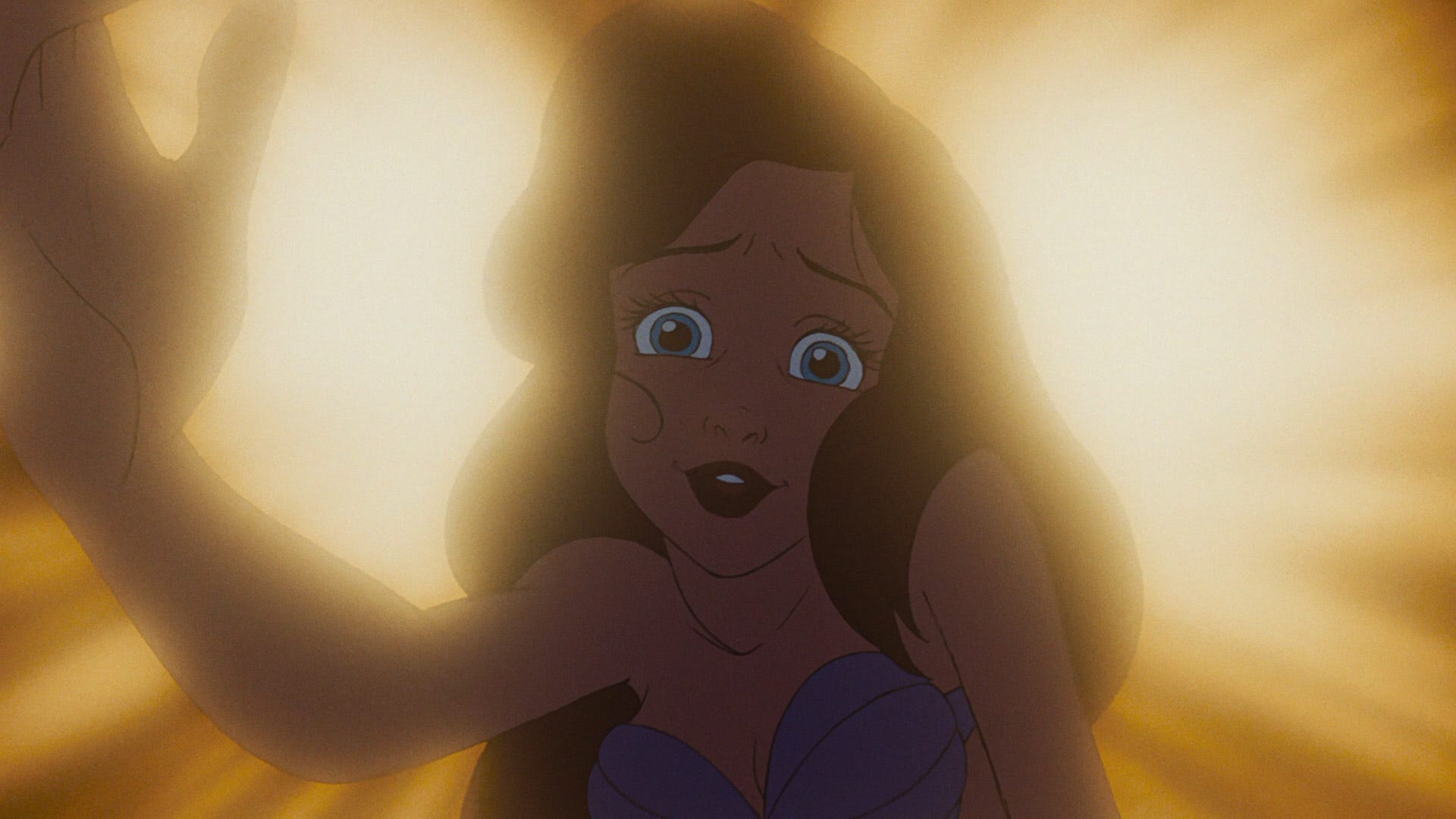
Within sixty seconds of me declaring this masterpiece as my favorite Disney movie of all time, somebody in the room inevitably begins interrogating me armed with claims that Ariel gave up the entire ocean, along with her voice, for a man. The main character is irreparably flawed, completely unwatchable, absolutely uninteresting because she gave up everything she’s ever known for a man she had just found and become infatuated with. It’s remarkable how many people share this opinion of Ariel. When the inevitable individual begins interrogating me with the above claims, there’s usually others in the room that are giggling along, either silently or verbally agreeing with everything being said.
I watch a lot of movies. I’ve read a lot of books. I’ve seen a lot of television shows. I love talking about stories. This is without a doubt the topic of conversation that I’ve had the most in my life – and it’s downright baffling how infrequently people push back on these claims about Ariel. It seems society has agreed, as a collective, that Ariel is a terrible protagonist because she gave up the ocean for a man, in turn making The Little Mermaid a mediocre film.
I don’t mind having this argument, because I know I’m right. In fact, by the time the conversation between me and the interrogator has concluded, I’ve usually successfully convinced everyone in the room that Ariel did not, in fact, give up the ocean for a man. She did not give up her voice for a man. You have every right to remain stubborn, to stick with the status quo which derides Ariel for no good reason, or you can listen to what the story is telling you. You can pay attention to what the songs and the dialogue are saying.
If you want to take your objectively incorrect opinion about Ariel to the grave, you have every right to do so. But if you want to be on the right side of this argument in the future, allow me to explain, in excruciating detail, why Ariel was so willing to leave her life under the sea in favor of a life out of those waters.
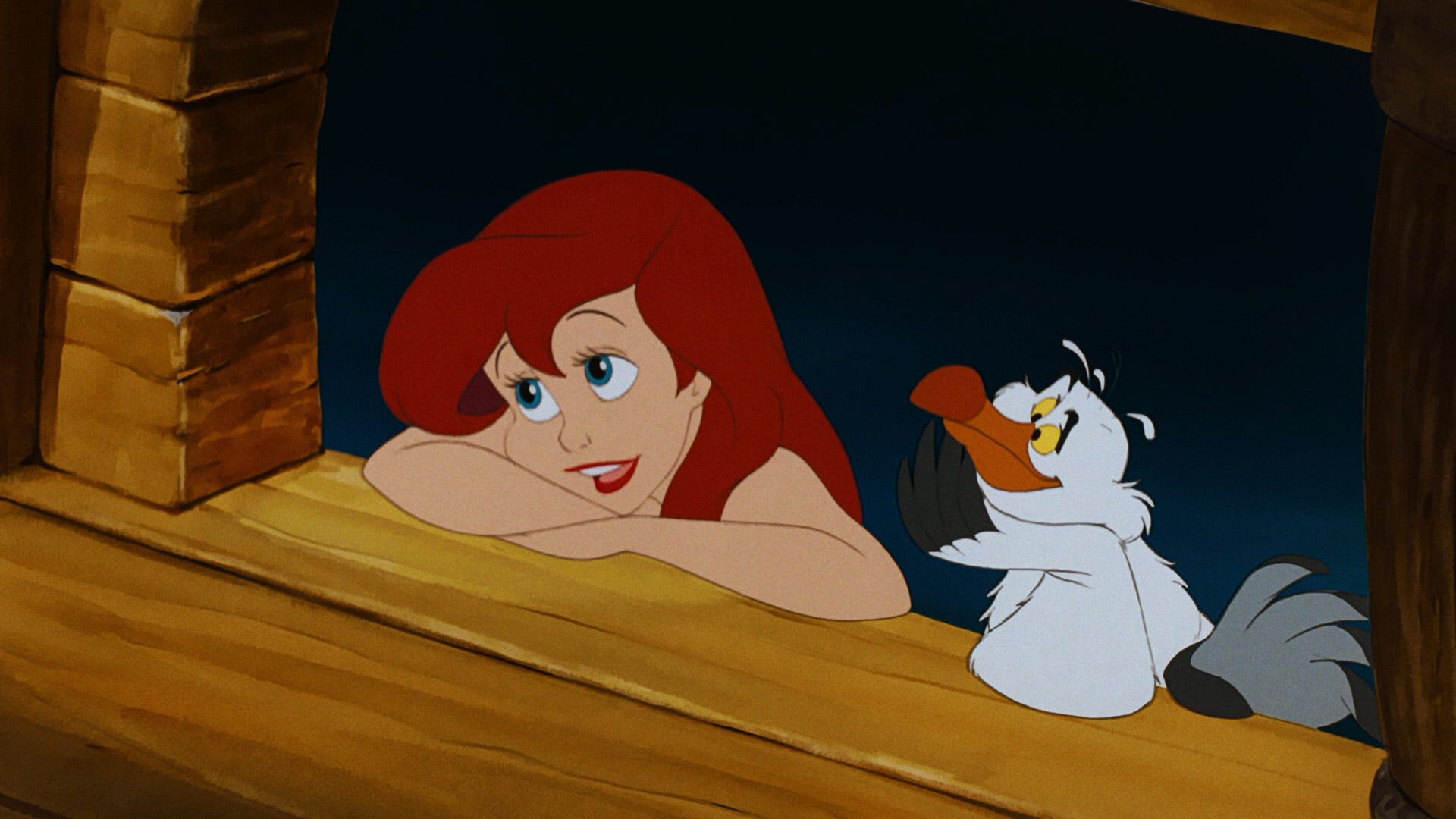
Aaron Sorkin, Oscar-winning screenwriter of The Social Network, Moneyball, and Molly’s Game, says that the easiest way to show a character’s intentions in a story is to have them say, “I want,” then follow that up by making it clear why that intention is important.
In musicals, this is often accomplished in song form, which over the years has been referred to as the Want Song. This is usually sung by the main character of the story, and it tells the audience how they are unsatisfied with their life as they know it, and explains what they are looking for — what they want for their future. This type of song was very popular among the animated movies that came out of Disney during their renaissance period, from 1989 to 1999.
Stephen Shwartz, the Oscar and Tony-winning musical theater lyricist and composer of such musicals as Godspell, Pippin, and Wicked, describes the Want Song as a moment in a musical that is not there “to move the action forward, but to set up the desire of the leading character that will drive the action for the rest of the show.” He says that any successful musical has one within the first fifteen minutes of the show, and feels that the lack of a Want Song is a weakness in most cases.
If you skip to exactly 15:00 on the timeline for the 1989’s The Little Mermaid, you’ll cut from Sebastian’s dropped jaw to Ariel’s collection of trinkets. And with that cut, comes the music that will build into this movie’s Want Song: None other than, Part of That World – a song written by the legendary lyricist, Howard Ashman, who wrote your favorite songs in The Little Mermaid, Beauty and the Beast, and Aladdin. Lin Manuel Miranda, writer of Hamilton and In the Heights, says Part of That World “may be the greatest Disney want song ever written.”
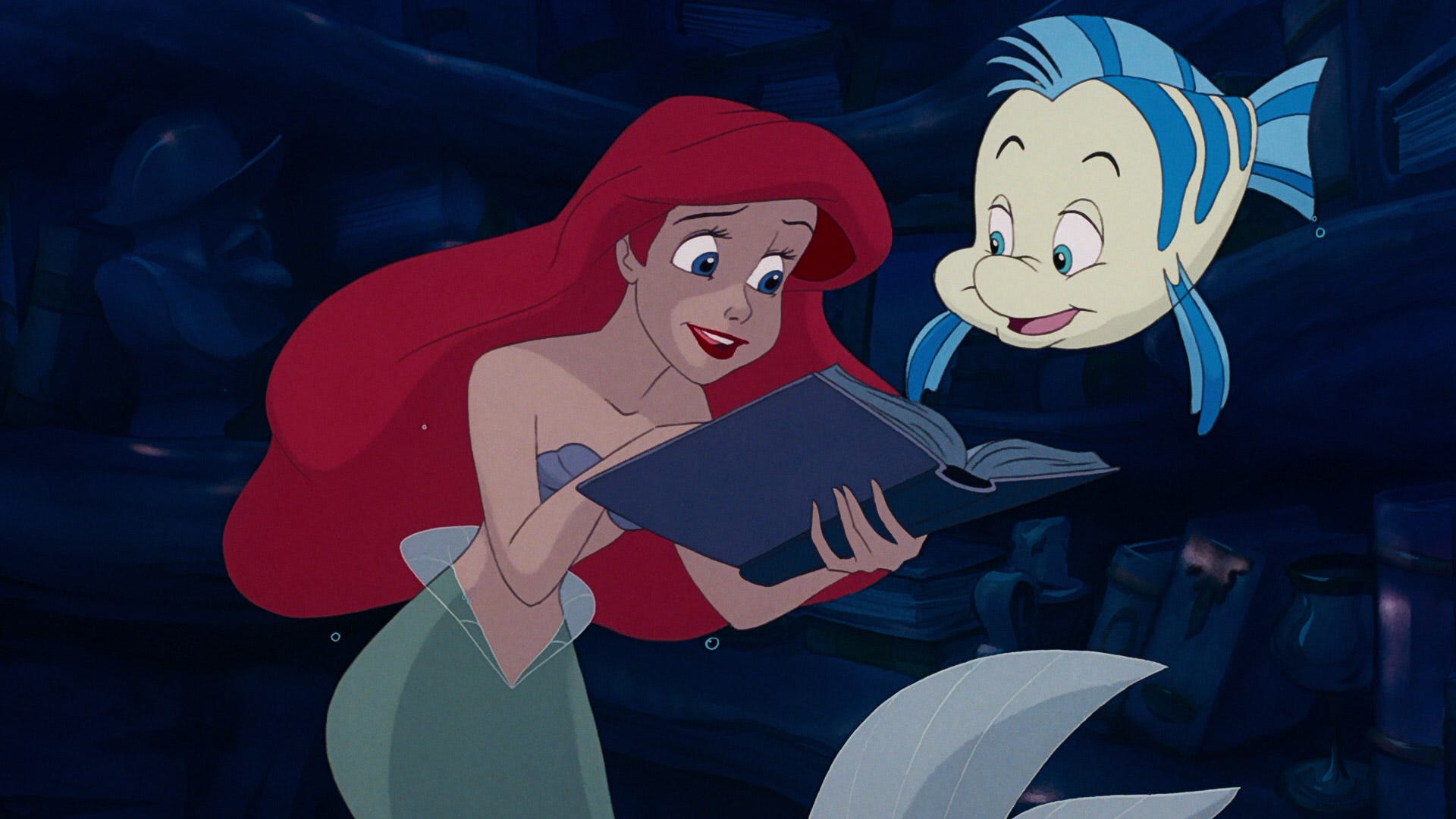
Holding the fork she had just found in a shipwreck, Ariel speaks of her father and their fundamental disconnect regarding the world outside of the ocean: “I just don’t see things the way he does. I don’t see how a world that makes such wonderful things could be bad.”
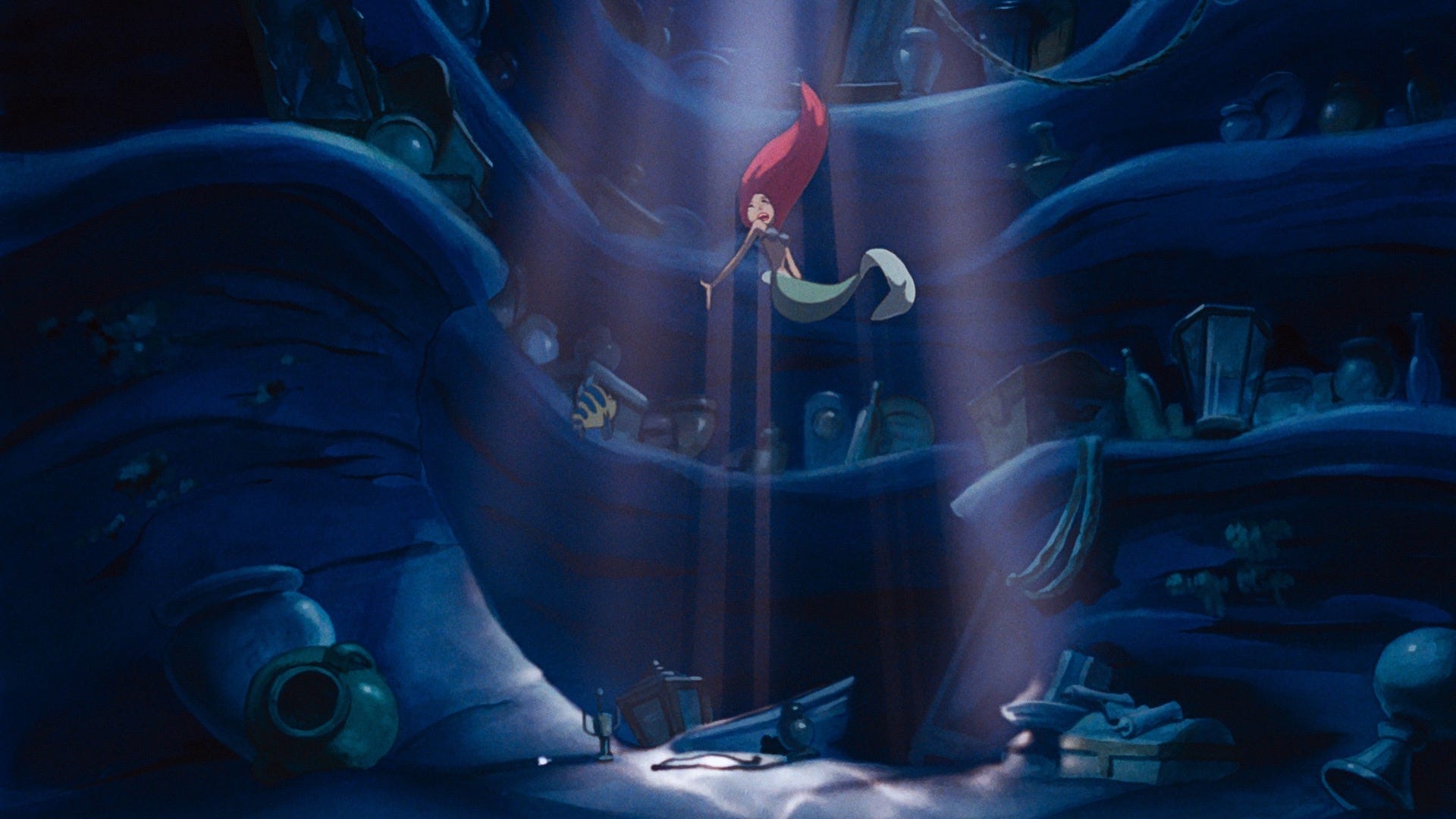
Ariel admires her collection of human objects, singing, “Look at this trove, treasures untold. How many wonders can one cavern hold?” Gadgets, gizmos, whozits, whatzits, thingamabobs: She has no idea what the names of these objects are, and it couldn’t matter less. Like a person who collects meteorites, she’s in love with them because of where they come from.
Ariel is a princess — the youngest daughter of the King of the Sea. She looks around at everything surrounding her, and, very self-aware, puts herself in the shoes of somebody who might spot her there, forlorn, desiring something more than what she has — something more than these trinkets; something more than the title of Princess; something more, even, than the vast ocean that, for all intents and purposes, is hers to do with what she will. She says, “Looking around, you’d think [Ariel’s] got everything.” To that, she says, “Who cares? No big deal. I want more.” Not more trinkets, not more titles, and not power. Like a child of a wealthy family who isn’t enchanted by all the glamour and glitz, Ariel doesn’t have any interest in the things others would die for. She wants more of what the world that gave her those trinkets has to offer.
“I want to be where the people are. I want to see them dancing. Walking around on those feet. Flipping your fins, you don’t get too far. Legs are required for jumping, dancing. Strolling along down a street.” Ariel, more than anything in the world, wants to live on land with people. Like a sixteen-year-old human who doesn’t feel at home where they were raised, she wants to leave her nest and see what the rest of the world has to offer. Like the human who doesn’t feel understood by her family, or feels trapped and suffocated by the walls surrounding their parents’ home, Ariel wants out — out of the sea that she was raised as a Princess by no choice of her own, and out from under her royal father’s thumb.
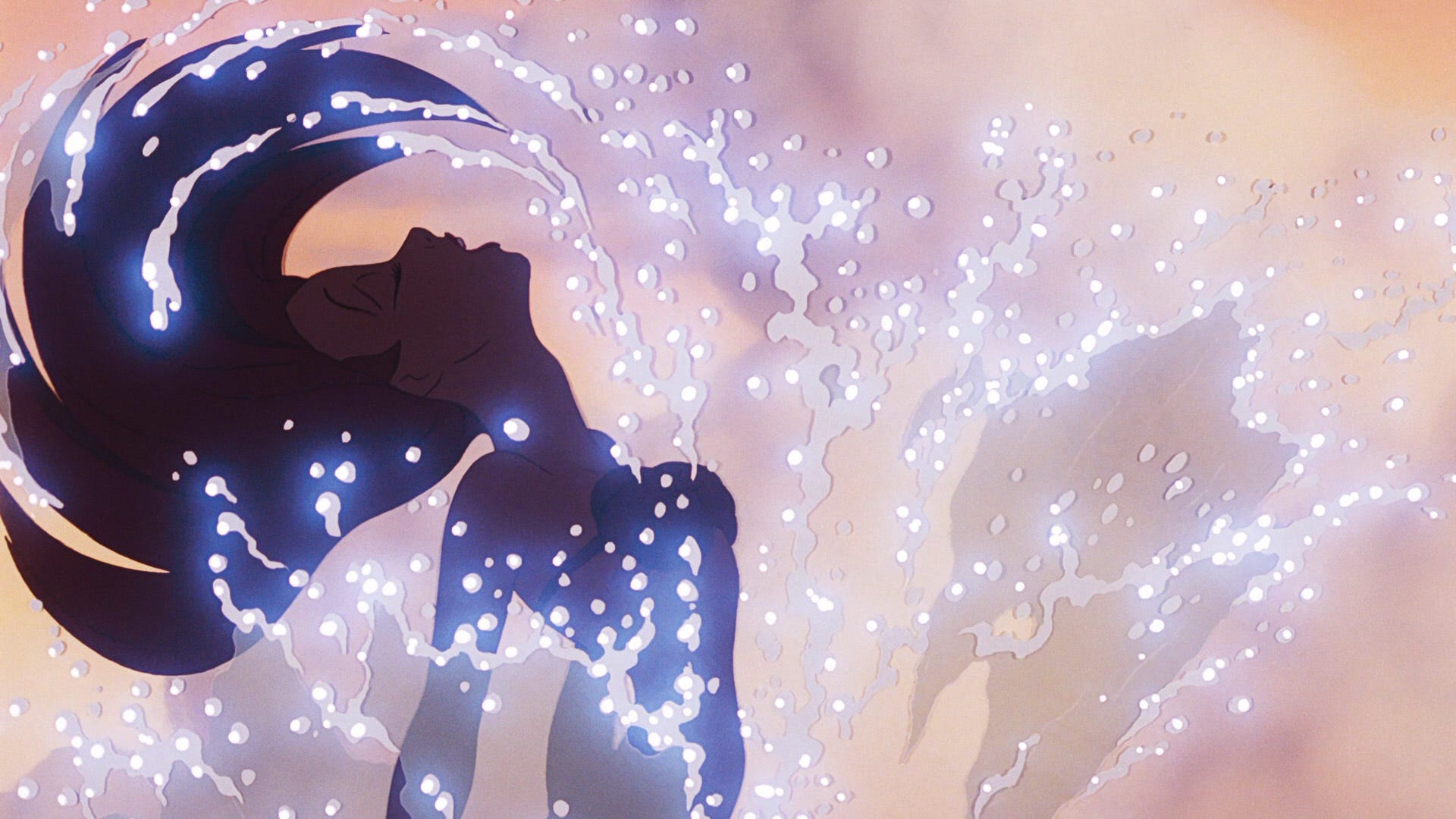
“Wandering free. Wish I could be part of that world. What would I give if I could live out of these waters? What would I pay to spend a day warm on the sand?” There isn’t a thing she isn’t willing to give to live on land. She’s willing to give everything up. She’s willing to leave her collection, her voice, her titles, her family, and even her ocean behind for something that she spends every waking minute yearning for: a life as a human with two feet planted firmly on solid ground.
“Bet you on land, they understand — bet they don’t reprimand their daughters. Bright young women, sick of swimming, ready to stand.” She’s been barred by her father from ever going to the surface again, as he demands that as long as she lives under his ocean, she will live under his rules. She’s a young woman, ready to take on the world with everything she has in her heart and soul. She’s ready to stand on her own, away from her powerful father, away from everything she’s always known. She’s a teenaged girl who is sick of seeing what she’s already seen, and sick of doing what she’s already done.
Ariel wants to feel a world she’s never been a part of — a world she’s been forbidden from ever even tasting. She wants to explore. She wants to feel things she’s never felt. She wants to learn. She’s “ready to know what the people know. Ask them my questions, and get some answers. What’s a fire and why does it burn?”
With all the feeling her body can muster, she looks up through the hole in her secret cavern, at the moon’s light refracting through water, and she cries, “When’s it my turn? Wouldn’t I love to explore the shore up above? Out of the sea. Wish I could be part of that world.”
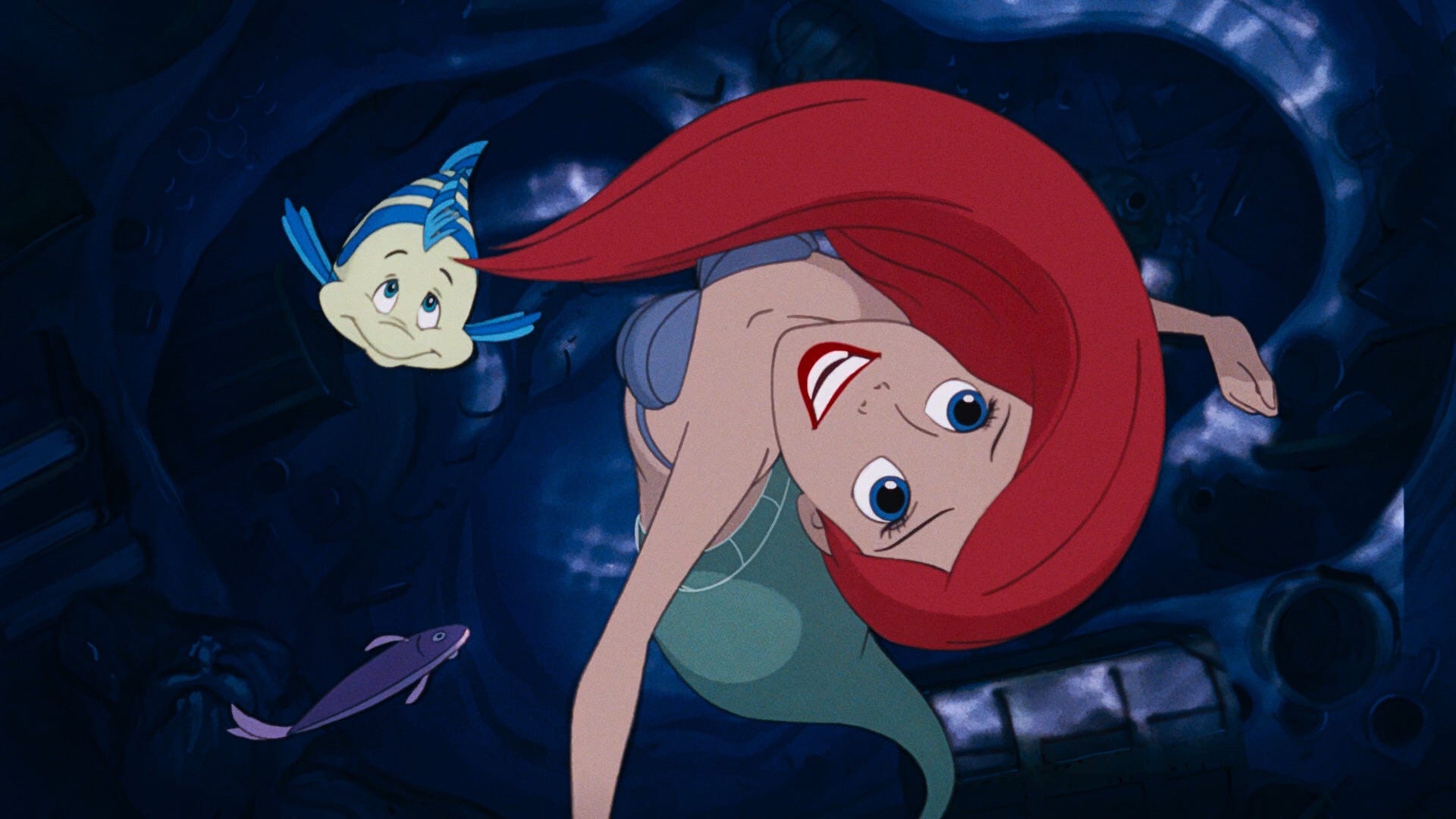
Approximately five minutes later in the film, Ariel spots a grand ship sailing under the giant moon, with colorful fireworks blasting into the air. What better way to present this boat to this very girl? She chases it down, ignoring Sebastian’s desperate calls. She reaches the boat, climbs up the side, and peeks through a slit near the floorboard. Her blue eyes widen at the sight of all the men dancing on board, as the long shadows of their legs fall on her. She stares at what her father had warned against, calling them barbarians and fish-eaters with hooks. This is also when she lays eyes on Prince Eric for the first time. She says that she’s “never seen a human this close before.” She’s instantly enchanted by him and his beauty — and like a normal sixteen-year-old girl with a crush, she appears to be hopelessly love-struck.
There is nothing that the universe can offer Ariel that she wants more than being a part of the world that she is observing now — a world that takes place outside of the ocean she had spent her first sixteen years in. There is nothing that she desires more than being a part of that world. Nothing. But as much as she wants this, she still feels trapped — she’s still yet to do something about it. Because what can she do? She’s a mermaid with a tail, who breathes under water, not a human with legs, who breathes oxygen through the air.
That is until she’s given the opportunity to change all that. She’s given the opportunity to trade everything she’s ever known for a life on land — a life she’s never known, but wants more than anything. After all these years, she’s given her chance and she wasn’t going to let it slip away. Ursula, the Witch of the Sea, offers her the possibility of remaining human in perpetuity, and Ariel beams at the image of her running on two legs as its being offered. She’s beaming at the silhouette of her body prancing on two feet.
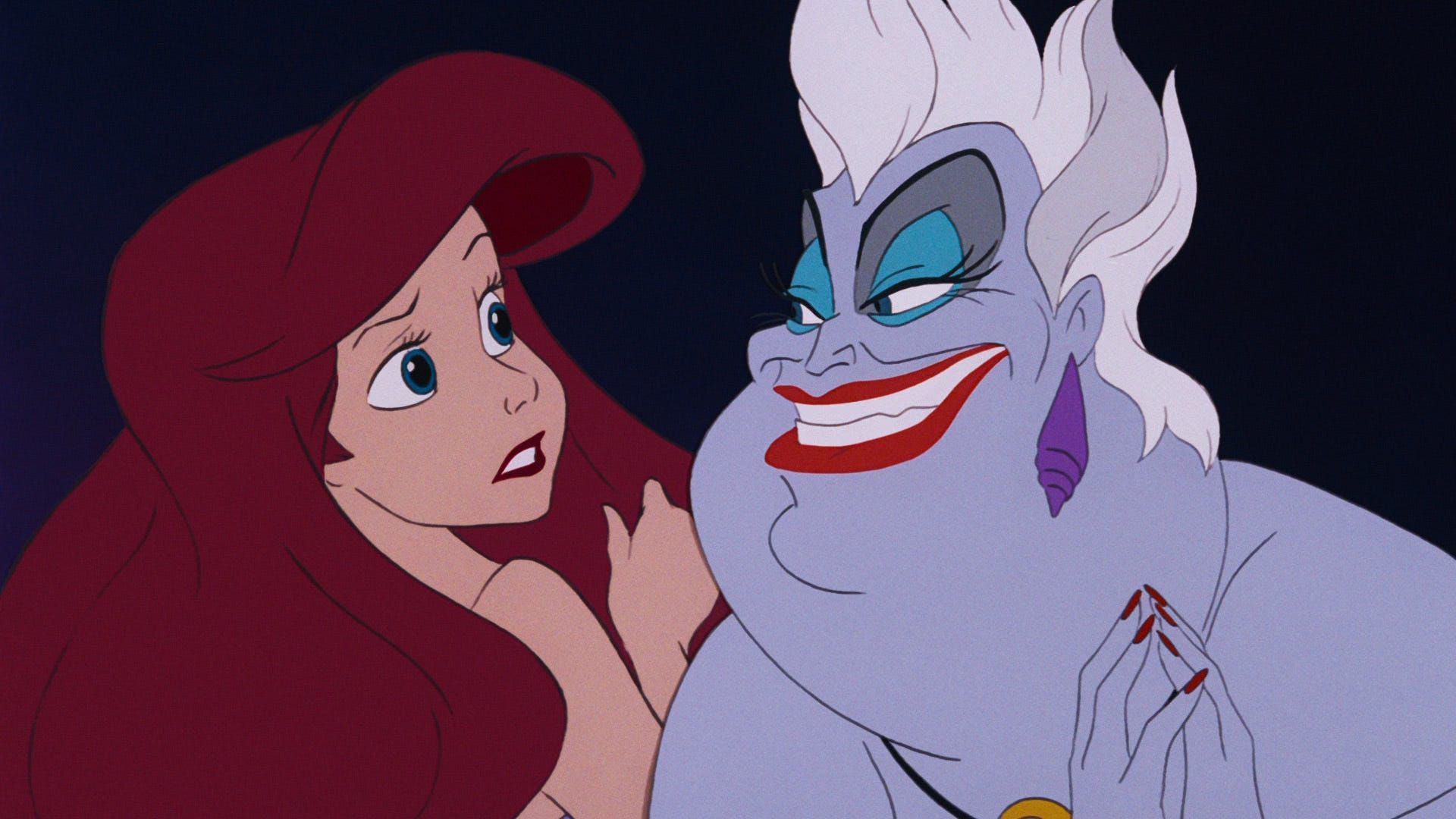
So, she takes Ursula up on her offer. She signs the contract, gives up her voice, and her home, and her family, and gambles away her life as she knows it. Did she give all of this up for a chance to be with this man she had just seen for the first time a few minutes earlier? Or did she agree to this deal for a chance to live on the surface as a human with legs?
The better question may be: Would she have given everything up if Ursula had offered her a chance at a life as a human before she laid eyes on Prince Eric? Ursula could have made this offer before Ariel saw Eric, but she didn’t. She waited until she had the chance to add a difficult time crunch to an already arduous task. Ursula’s eels saw that Ariel was in love with Eric, and they saw that Eric was enchanted by her and her voice. Ursula saw her chance to trap this impulsive, infatuated sixteen-year-old girl who wants nothing more than to be a human — to seal her fate in a task that appeared to border on impossible. Ariel had three days to make Eric fall in love with her. If he kisses her before the sun sets on the third day, she gets what she’s always wanted: to become human, permanently. This was enough of a reason for her to agree to this deal, even if failing this challenge meant she would “belong” to the Witch of the Sea. If Eric wasn’t in the picture, no matter what she was going to have to give up, Ariel would have agreed to any deal that would result in her becoming human.
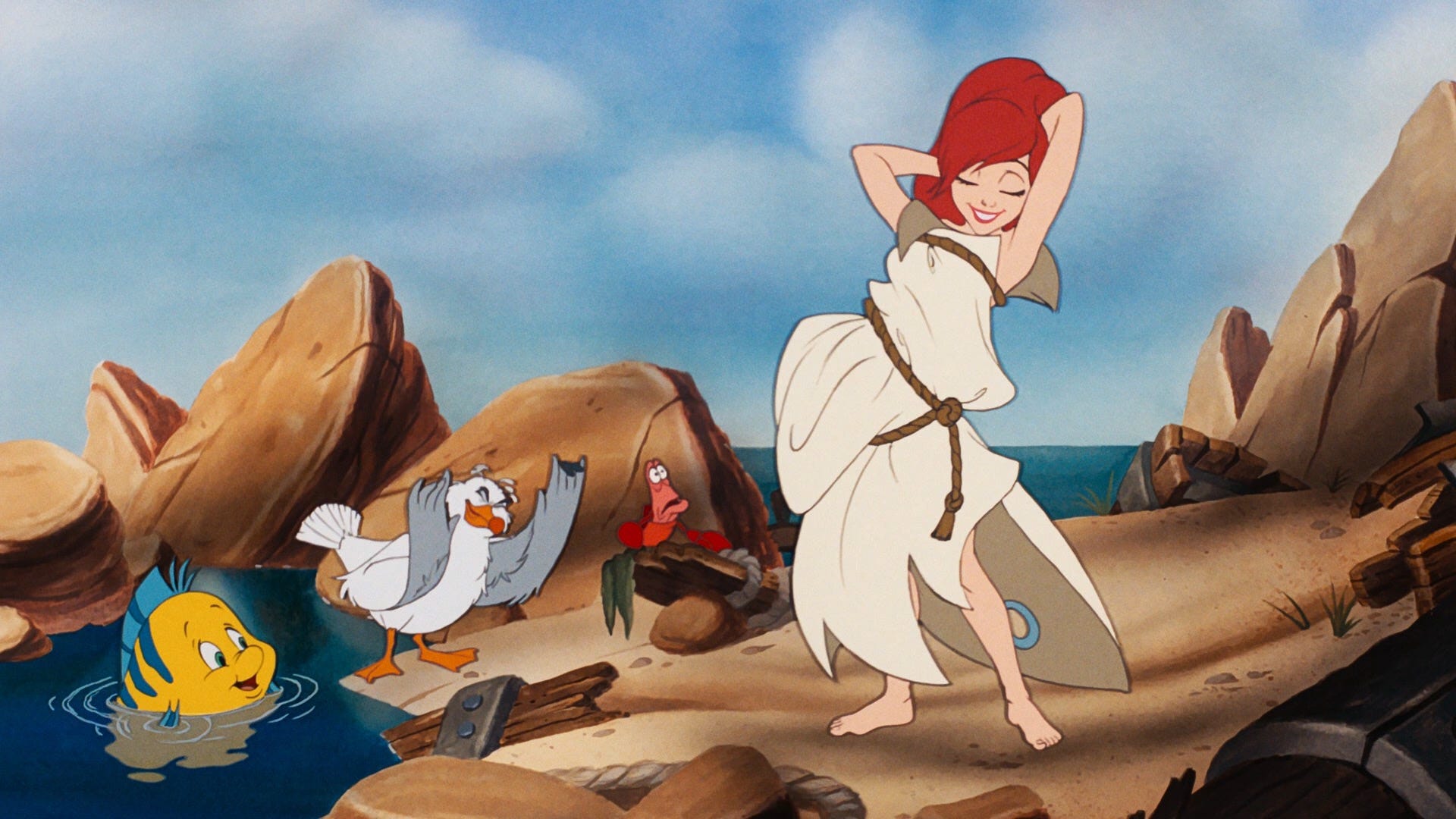
Ariel didn’t give everything up because she fell in love with Eric. She gave everything up because she finally found a way to become human. She gave up everything for a life on land at the first opportunity she had to do so. The fact that she got her legs after she met Eric had nearly nothing to do with her and had almost everything to do with Ursula. The Witch of the Sea thought she had a sure-fire way to get what she wanted and she acted on it, only when her plan felt fool-proof. And, in fact, Ursula’s plan worked to perfection. All of the pieces fell into place, and she got everything she wanted.
The timing of these events lead some to argue that Ariel gave up the sea, her titles, her voice, and her family, all for a man — that she only acted on her yearning when she fell in love. It was established that Ariel wanted to live on land, be a human, be a “part of that world” before she ever laid eyes on Eric. Ariel’s desire in life wasn’t to find a man and settle down with him, it was to look down at two feet as a human, instead of looking up at the moon through the ocean’s water as a mermaid.
When Ariel finally gets her legs and she makes her way to the surface with Flounder and Sebastian, she wiggles her toes, glowing like she hadn’t up to that point in the movie. Sebastian loses his mind, claims this is a catastrophe, and threatens to go to King Triton to tell him what his daughter has done — to force him to find a way to reverse this sequence of events. He says, “Maybe there’s still time. If we can get that witch to give you back your voice, you can go home with all the normal fish, and just be…” He gazes into her wide eyes as they look seconds away from filling with tears before he finishes his thought. “Just be… Just be… Just be miserable for the rest of your life.”
Up until Ursula’s offer, Ariel’s dream was impossible. She would spend the rest of her life wishing she was something else — someone else. Her goal for the rest of the movie was to make Prince Eric fall in love with her. But making the Prince fall in love with her for the sake of having a Prince fall in love with her wasn’t the goal at all. Making Prince Eric fall in love with her would make her dream come true — only because her dream was to be human, and making Prince Eric fall in love with her would make her human for eternity.
Ariel had a clear want. The journey to getting what she wanted was not a straight line. There were obstacles put in the way — both pleasant and unpleasant. But the destination was always the same. The destination was always to become human. And when all was said and done, Ariel got what she wanted: She escaped the life that sucked her of joy, and she fell in love along the way. She fell for a man — mere flesh and blood — who put his life in grave danger to keep her from falling victim to the now all-powerful Ursula, shouting as he rowed away from safety, “I lost her once, I’m not going to lose her again.” He was the only thing standing in the way of Ursula getting everything she ever wanted. And this led to Ariel getting everything she ever wanted, and more.
As King Triton and Sebastian gaze at Ariel, who sits atop a rock as a mermaid once again, they agree over the fact that Ariel truly does love the human that washed up on the shore. The crab says, “Children have got to be free to lead their own lives.” Triton realizes that he is no longer looking at a helpless child. He’s learned that she’s ready to lead her own life. She made a poor, impulsive decision, gambling everything away to Ursula, but she survived and came out the other side, as headstrong as ever. She may be his youngest daughter, but she’s no longer a guppy. Looking at her now, King Triton sees a bright young woman, sick of swimming, ready to stand. He releases a deep sigh, then says, “I guess there’s just one problem left… How much I’m going to miss her.”
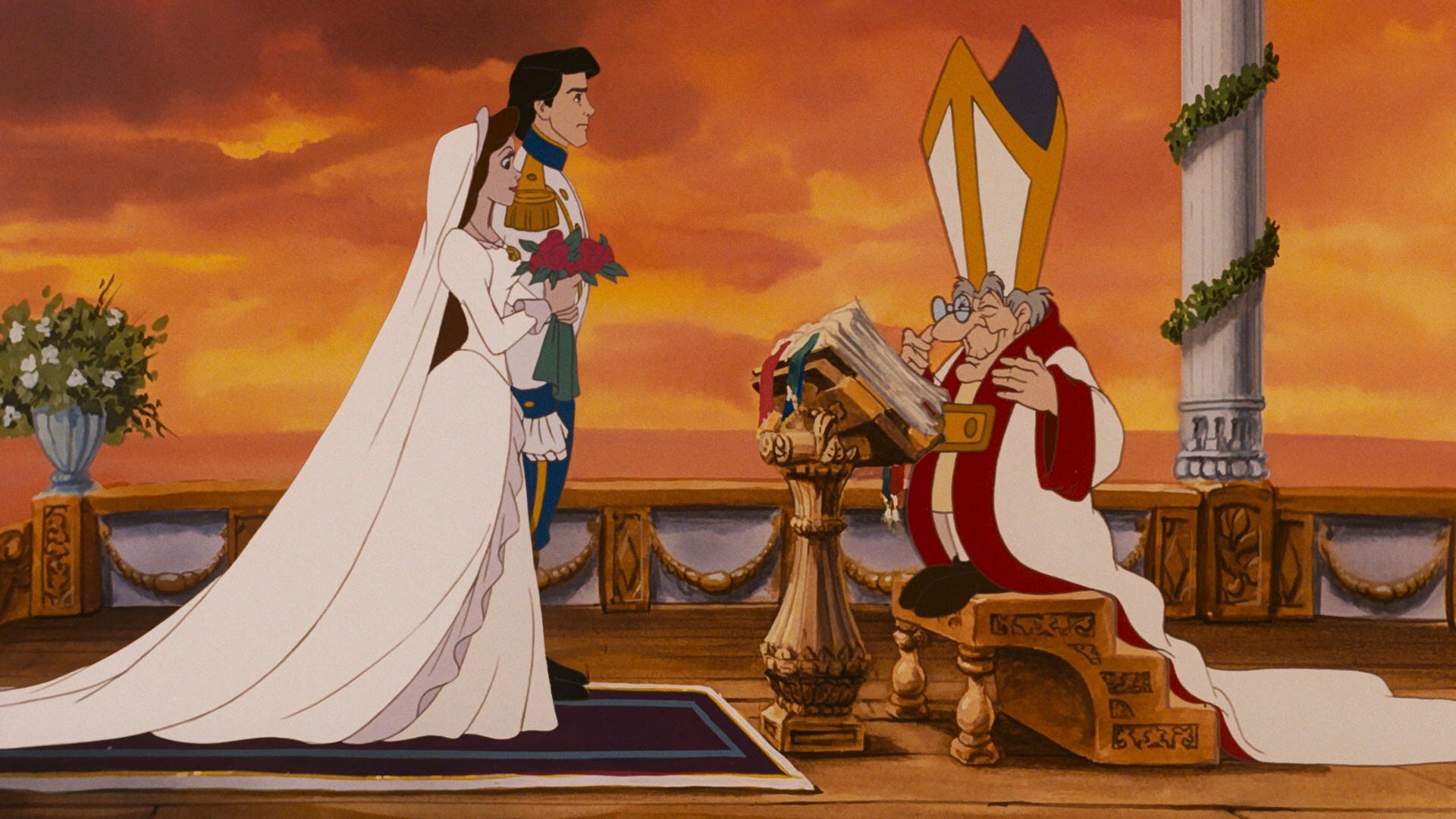
With her wedding gown on and tears filling her eyes, Ariel says goodbye to her father, turns to her husband, who bows low before the King of the Sea — and then, standing on two feet, she shares a true-love’s kiss with the man who saved her life from the witch that plotted to take it all away, allowing her to live the life that, as a mermaid, she could only look up through the hole in her secret cavern and dream of.
And if everything I just said was not enough to convince you of these points, allow me to use the 2023 live action remake to further solidify my argument. And before you argue with your screen, saying “Of course the 2023 live action remake took a more feminist route”, I’m going to stop you right there – the 2023 live action remake did not take a different route; the live action remake doubled down on what was already established because there still seems to be a loud majority that think Ariel gave up the ocean for a man.
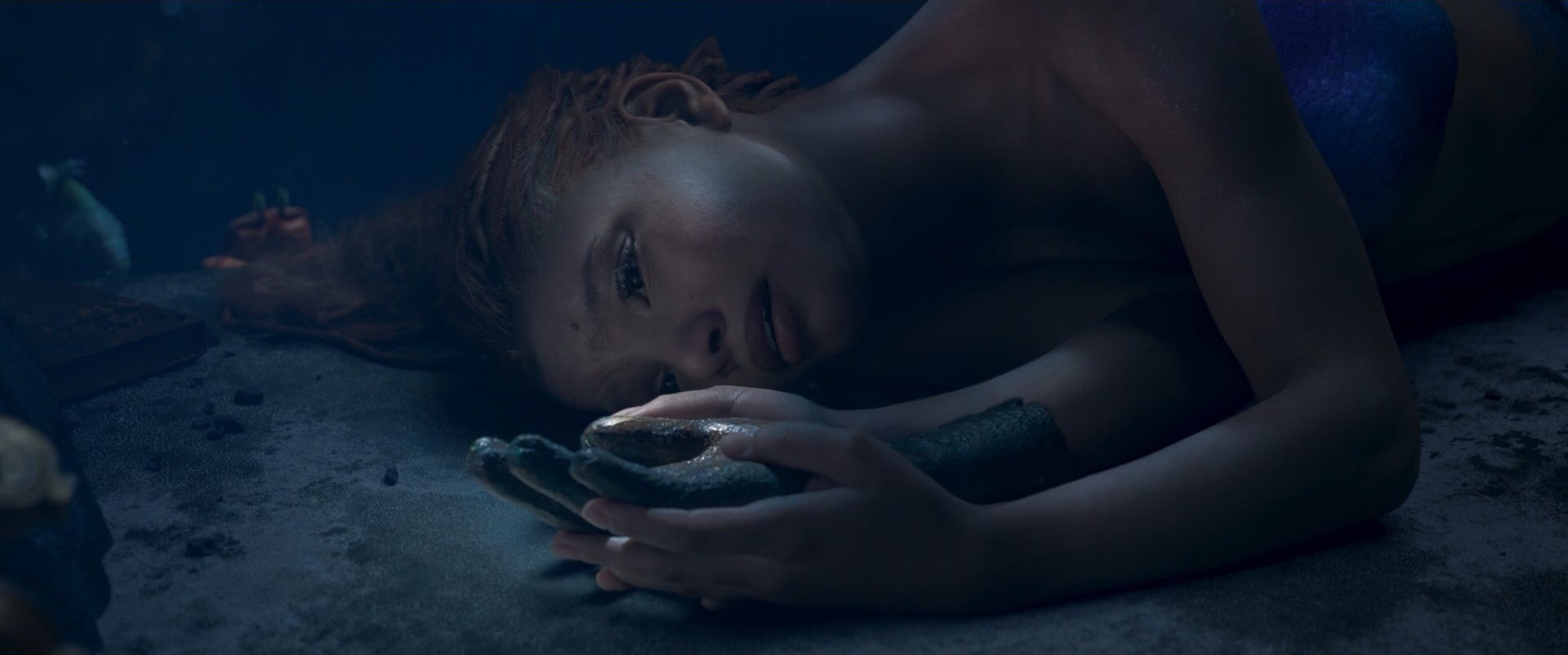
The remake makes clear Ariel’s motivations using two characters in particular. It is good writing that parallels the journeys of side characters with that of the protagonist. These parallels show us where the characters diverge in philosophy, in motivation, in how their minds are wired. Paralleling also helps make the theme of the story abundantly clear, as multiple characters are devoting their lives toward a similar goal. Keep that in mind as I proceed, because I may briefly go down a couple tangential paths.
The first of the two characters I mentioned is Ursula, as it seems as though the writers used the Sea Witch as a mouthpiece to make sure the audience understood why Ariel was doing what she was doing. The first time we see her, she’s bemoaning the fact that her brother, King Triton, kicked her out of the family, forbidding her from celebrating with the rest of them on this Coral Moon. “Now look at me,” she says, “the family pariah, wasting away to practically nothing, banished and exiled, driven halfway to madness, in this dim little crevice for fifteen long years.” That sounds to me like somebody who wishes to be somewhere other than the place she is at. That sounds to me like somebody who is tired of looking at the same things, doing the same things, living the same day over and over again. That sounds to me like there may be a parallel between the antagonist of this story and the protagonist of this story.
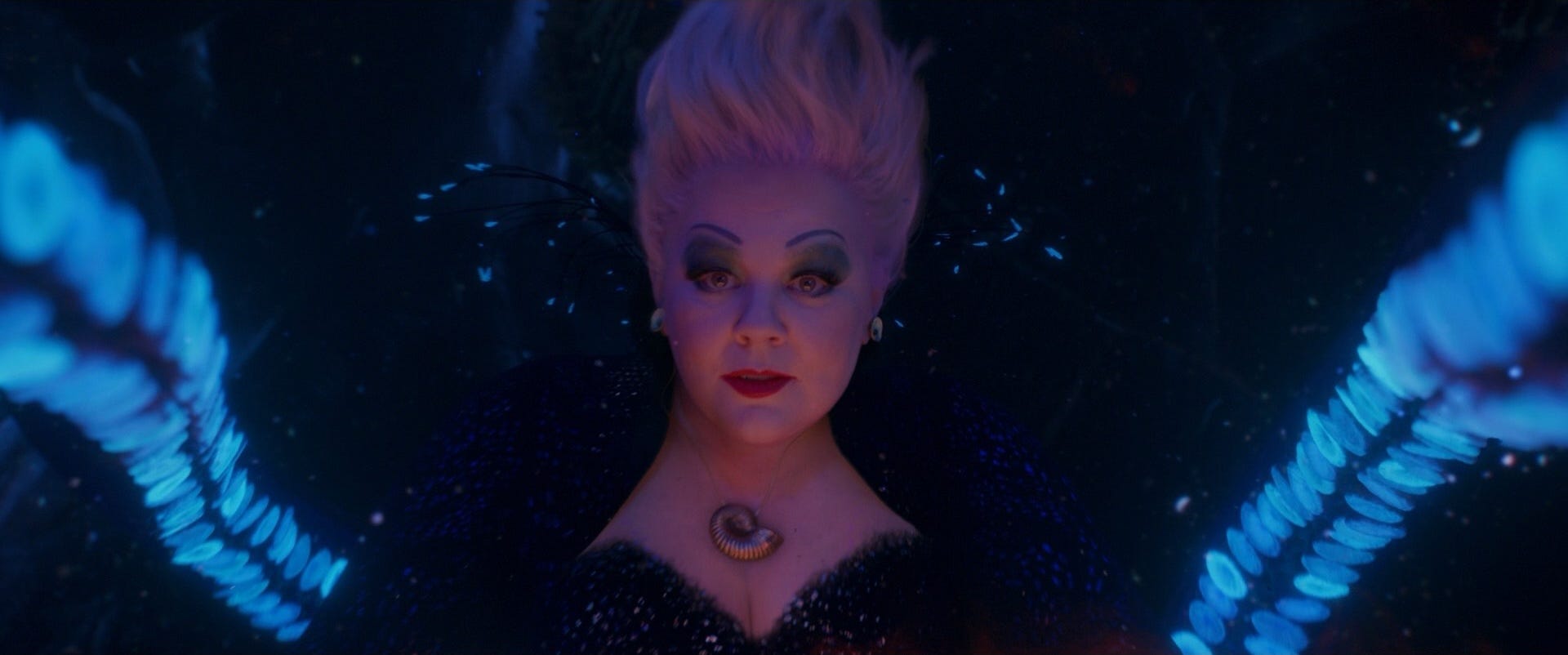
Later in this scene, she states that she has figured out a way to exact revenge on her brother. “I may have finally found Daddy’s weakness,” she says. “Red’s fascination with humans might be just the opening I’ve been waiting for.” In other words, the villain of the story has found our hero’s fatal flaw. Based on what the text is telling us, let me ask you: Is Ariel’s fatal flaw that she fell in love with a man, or is it that she is desperately fascinated with the human world?
Less than twenty minutes later, Ursula watches Ariel save Eric and realizes that the young mermaid has become infatuated with the Prince. As Ariel sings to Eric, Ursula cackles, saying, “It’s too easy. She’s already in love with the human world, and now she found her soulmate.” The events of the plot are the same as they are in the animated classic, but it’s the dialogue that’s been added for the Sea Witch that is important here. It’s not an accident that she mentioned Ariel’s love for the human world before she mentioned the fact that it appears the girl has seemingly found her soulmate.
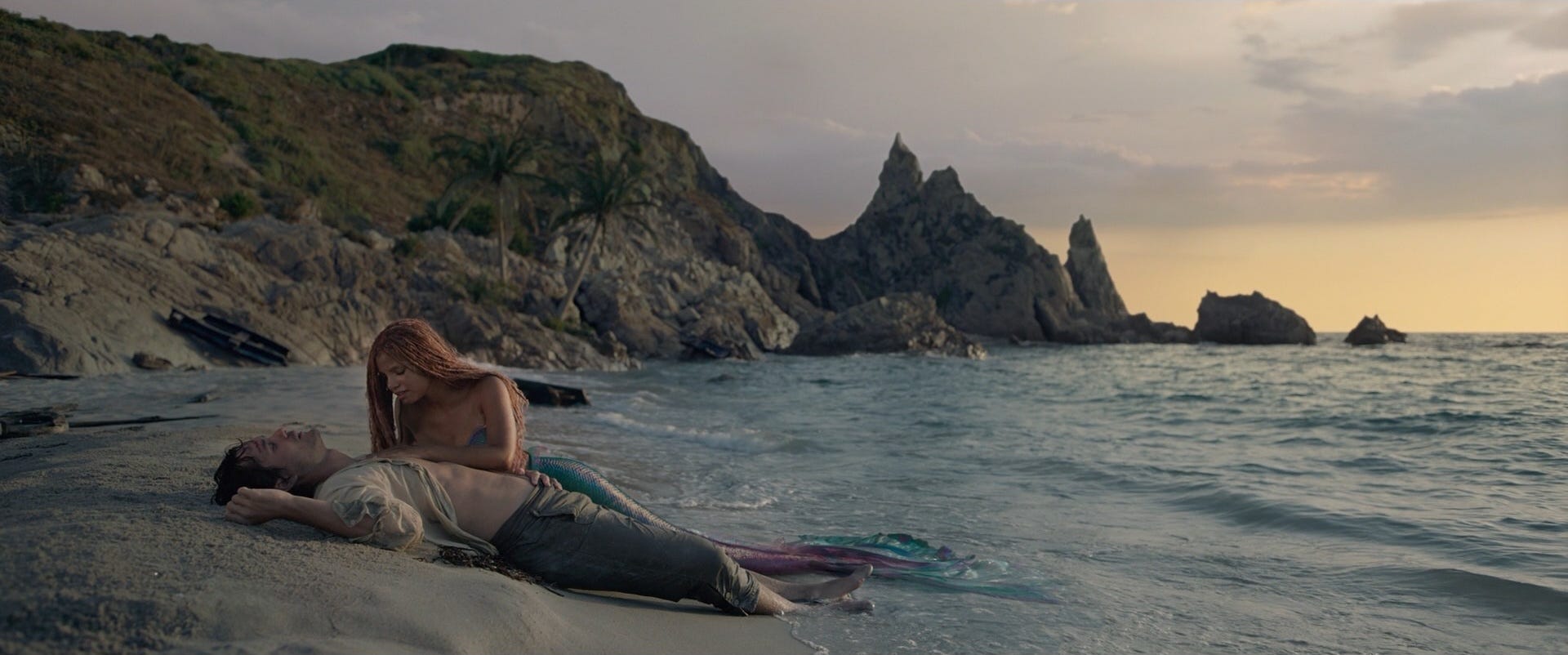
I will point to the screenplay one final time, and then we’ll move on to Character #2. At around the hour mark (also known as the film’s midpoint, where the story should turn on its head in some way or another), Ariel agrees to meet Urusla in her little crevice to discuss how the Sea Witch can help her. Ursula says, “I wouldn’t choose to live like this, believe me. Daddy’s been so unfair to both of us, controlling everything we say and do. In a way, we’re the same, you and I… We never did get along. He always got what he wanted, and what did I get? Nothing! Sound familiar, hon?” There’s the antagonist directly bringing to light parallels between their stories, wielding it as a weapon against her prey.
“I’ve been watching you for a long time now,” says Ursula. “What you really want is to be up there in the above world.” She goes on to mention the subject of Ariel’s infatuation, but not before she mentions what Ariel quote-really wants. When Ariel decides against taking the deal, too unsure of whether or not to trust this malevolent aunt of hers, Ursula throws one final piece of bait at the mermaid. The bait wasn’t Eric. It wasn’t true love. With Ariel swimming away from her, Ursula utters, “Fine then, forget about the world above. Go back home to Daddy, and never leave again!” Ariel gasps, spins around, and her decision has essentially been made on the spot. It was the threat of never seeing the world above, never leaving her father’s home that pushed her to sign her life as she’s always known it away to Ursula.
With that, this court allows the Sea Witch to step down. I now call to the stand, none other than Prince Eric himself. The 2023 remake does wonders with this character, and in doing wonders with this character, they do wonders with the eponymous little mermaid. Eric is given a real backstory, as well as wants and dreams of his own. How this helps Ariel is in the ways I mentioned earlier: His wants and dreams parallel Ariel’s, making hers clearer, embedding them further in the story being told.
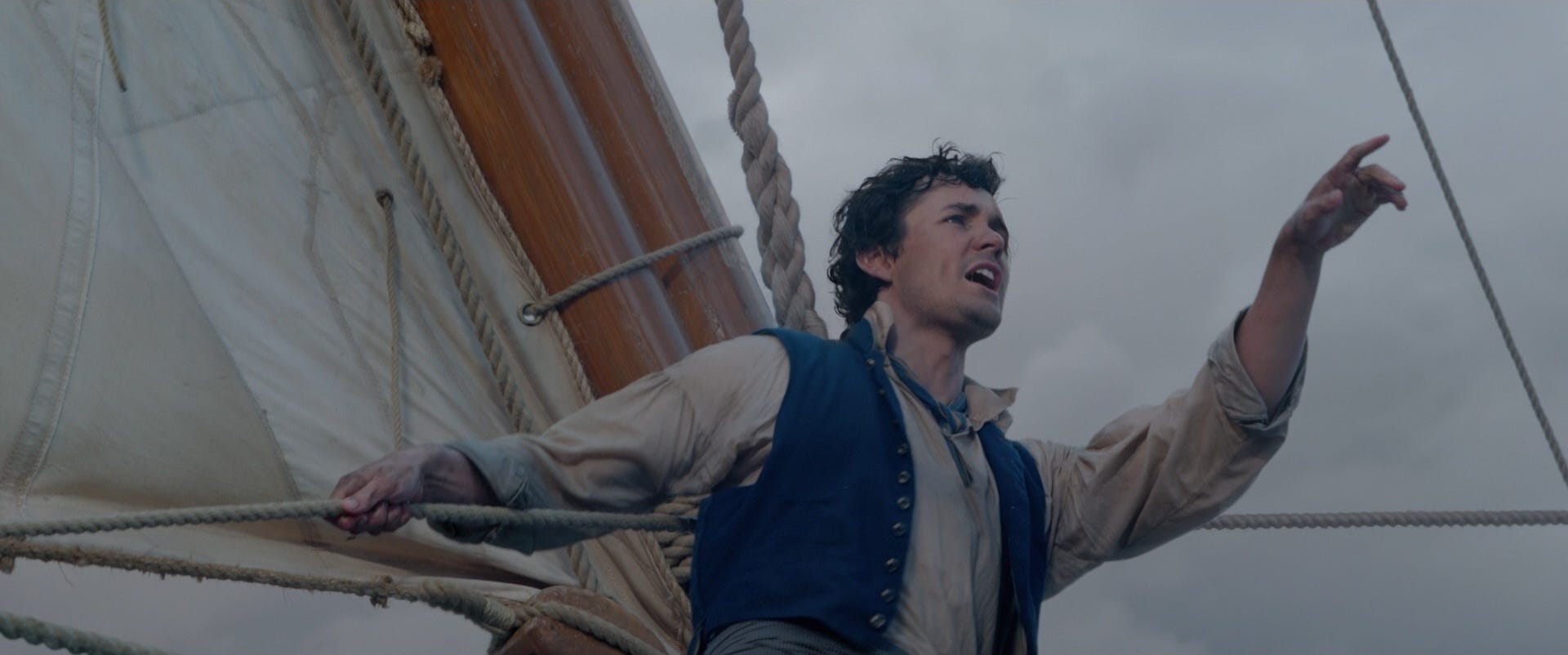
Early in the movie, in an argument with Grimsby, Eric says he doesn’t want to be like his father, “cut off from the rest of the world.” He’s told that his responsibilities are at home. He refuses to be “trapped inside that castle, in isolation and fear.” He grabs Grimsby’s full attention and tells him, “We have to stay open to what’s out here.” He moves to gaze out into the sea. “I can’t explain it, Grims. It’s in my blood. I feel there’s something out here calling to me.” Eric expresses all of this before being saved by Ariel. His desires to explore uncharted waters were within him before he fell in love.
Speaking of uncharted waters, that is where I will finally rest my case. I will conclude this tirade exactly where I started it. This live action remake did a lot of things well. One of the best things it did was give Prince Eric his very own Want Song. It comes moments after his mother forbade him from taking any more voyages at sea, crushing his dreams not unlike how Triton crushes Ariel’s. The first lines of the song go as follows: “All I ever wanted was the open sea and sky, freedom from the life I always knew.” Swap those lyrics from open sea and sky to solid ground and sun, and this could have been the beginnings of another want song for Ariel. He goes on to describe how he wants Ariel to find him again, but not before he mentions the dreams he had before meeting her.
The man who composed Eric’s Want Song is called Alan Manken. He also happened to compose Ariel’s Want Song all those years ago. Manken says of his lyricist partner, Howard Ashman, “He had this unbelievably ability to bring the contemporary inner life of a modern person into fairy tale characters.” It is not only in fantasy that a teenaged girl would want to explore a world outside of the figurative four walls that her family or society had designated for her. It’s not far-fetched to think a young woman would want something more from her life than only what she’d always known. It’s within us all to want more, to want new, to want different.
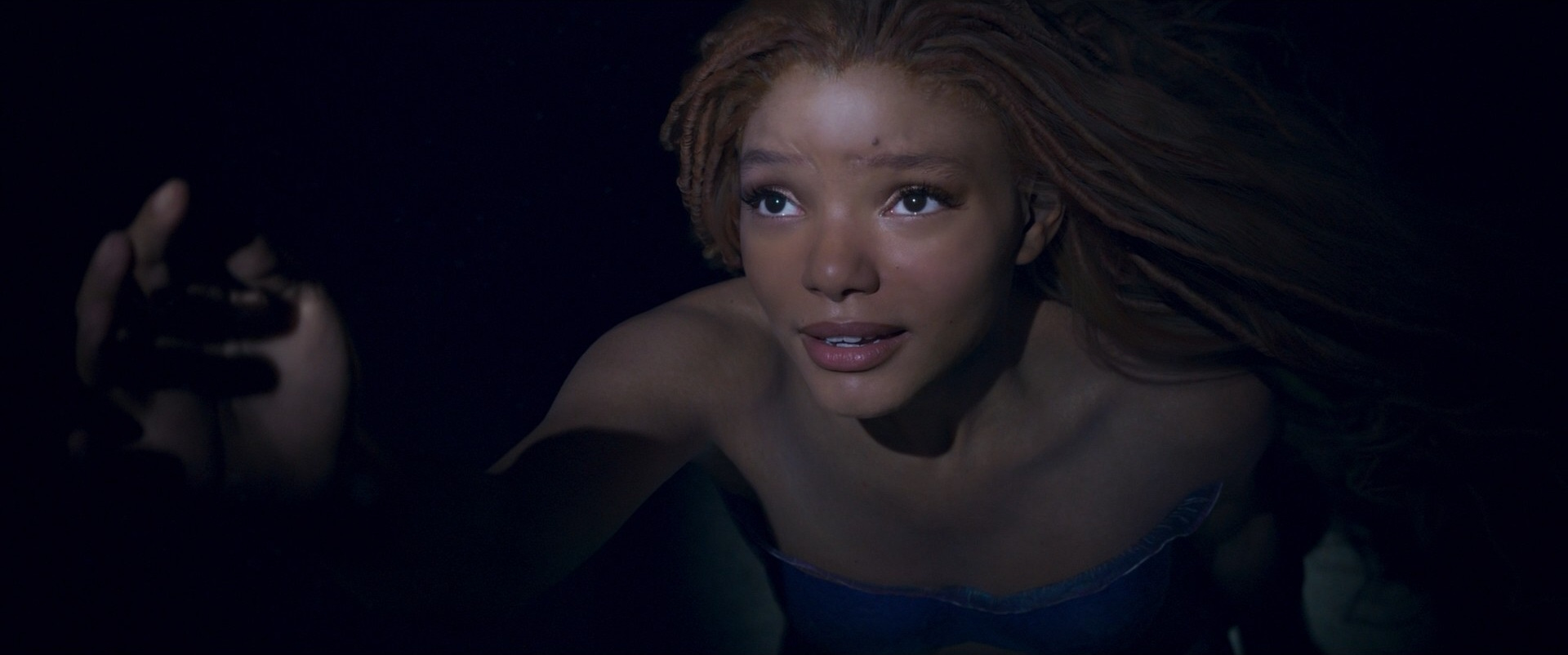
So, no, Ariel did not give up the sea for a man. Did she fall in love with a man as she endeavored to step foot out of those waters? Yes, there’s no denying that. But there’s also no denying that the life she wanted was one that she wanted before that man ever came into her life. Her hopes and dreams were there before he fell off of his ship, and they endured through to their happily ever after, and presumably, beyond.